

Facette Gallery
Key Interior Design Trends Set to Define 2026
Key Interior Design Trends Set to Define 2026
Share
Courtesy of Vogue Online
It would be slightly ridiculous to reinvent your entire home every time a new interiors trend rolled around, but taking a closer look at what’s poised to define 2026 certainly has its merits. It can offer some much-needed inspiration if you’re updating a room or renovating, but perhaps more importantly, these trends mirror culture at large—how we live, what we value and how we want to feel when we wake up in the morning and come home at night.
It may come as no surprise, then, that we’re collectively starting to embrace a more lived-in, time-worn aesthetic (as you’re about to discover)—not least when the world outside our doors can feel dark and foreboding.
2026 will see us embracing the natural, the organic and the unapologetically fabulous. So from tassels and trims to rich, aged woods and beyond, here Vogue explores the key interior trends set to shape the year ahead—along with some practical tips and shopping ideas along the way.
Lived-in Interiors
Homes that feel genuinely lived-in and loved form one of the defining moods of the year—and for most of us (save for the lucky, naturally tidy few), it’s a shift that has been a long time coming. “I’ve noticed a growing awareness on social media that decorating should never be just for the photograph,” says Lucy Hammond Giles, director at Sibyl Colefax & Fowler “There’s a real upswell of people showing their rooms as they’re actually used and lived-in.”
Sophie Salata, head of brand at Vinterior, echoes this sentiment, noting that 2026 will be all about incorporating pieces and creating spaces that truly feel like home. Imperfection, gentle clutter and interiors that look as though they’ve been pieced together over many years feel especially resonant—and inviting—right now.
Sustainability is also top of mind for clients and designers alike. “We’re thinking more about smaller makers who work closer to home, as well as antiques—which are arguably the most sustainable way to buy furniture,” says Hammond Giles. “Reuse, remake, repurpose—it gives pieces a completely new lease of life.”
Wood
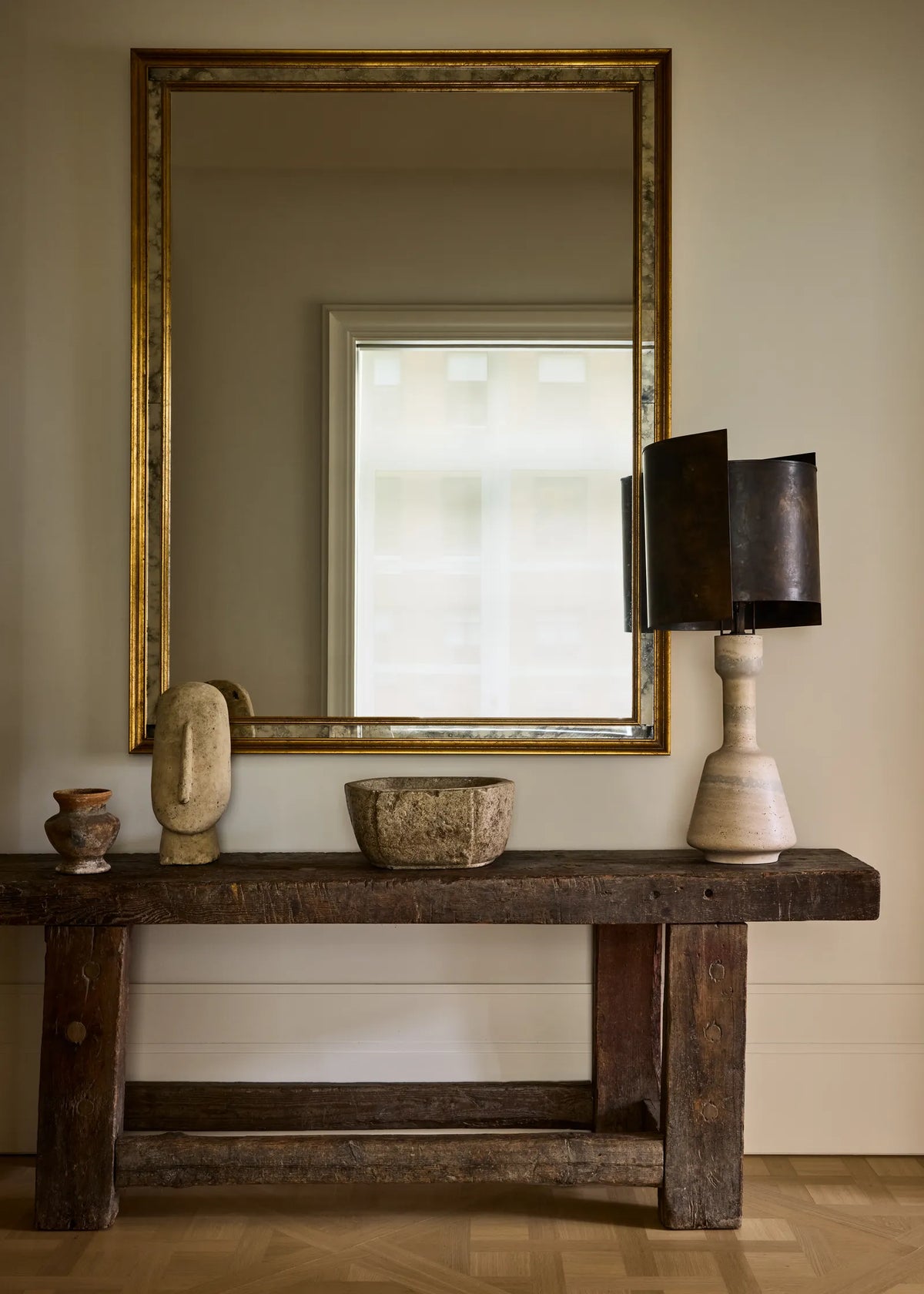
Our 2026 obsession with wood doesn’t stop at the kitchen. “Darker-toned woods are making their return after many years of paler varieties dominating,” says Lauren McGrath of Studio McGrath—but the key is character. “Think reclaimed pieces, burl styles, deeper tones and well-worn vintage plinths,” adds Katie Harbinson, aligning perfectly with the wider shift toward interiors that feel layered, personal and well-loved.
Indeed, Google searches for “burl wood furniture” are up by over 5,000% in the last month. Duggan notes a parallel rise in chunky, vintage Brutalist furniture—pieces with heft, patina and presence. (Search for “Guillerme et Chambron” or “Brutalist furniture” on Vinterior or eBay to begin your hunt.)
Beds are also getting the timber treatment. “We’re doing a lot of sleigh-style beds that cocoon and envelop for comfort and style,” says McGrath, reflecting a wider appetite for shape and softness juxtaposed with wooden materials.
Earthy Paint Colors
Color may be deeply personal—and intimately tied to the rooms we’re decorating—but certain shades are unmistakably gaining momentum as we head into a new year. Dusty blues, in particular, seem to be everywhere, often paired with richer, earthier tones. Duggan notes that chocolate brown’s newest (and most flattering) bedfellow is a pale, powdery blue.
“I am harnessing more deep, muddy greens, caramels and ochre in upholstery, plus I’m also color drenching rooms in these palettes too,” says Harbison. Meanwhile, Hollond has noted a growing appetite for high-contrast color pairings, especially on woodwork. “It creates a real sense of drama and helps architectural details, such as window frames and door architraves, pop.”
Another rising favorite is artichoke green—a calming biophilic shade that introduces a welcoming hit of nature without overwhelming a space.
Tactile Metalwork
“Metal has always had a place in interiors, but what’s changed recently is how it’s being used,” says Marta de la Rica. “We’re seeing a shift away from metals as purely industrial or decorative details, and more as a central material in furniture that feels sculptural and emotional.”
Her new Of Marble and Metal collection exemplifies this evolution, celebrating metal as a tactile, living material—one that’s meant to be touched, and which slowly develops its own patina over time. The secret to using metal beautifully in an interior lies in contrast. On its own, metal can feel intense and stern, but when paired with natural materials—marble, linen or timber—it becomes softer, more grounded and human.
“Metal records the passage of time,” de la Rica adds. “And I think that’s what makes it feel so relevant now: it carries, presence, memory and permanence in a world that’s constantly moving.”
Big Art
It’s not always easy finding great artwork at a good price—not least when you’re after something XXL. Enter Emma Lang, founder of SOTA, an online marketplace for affordable art, who has launched the XL Print Collection. Featuring more than 500 large-scale works (some stretching up to two meters wide) by artists from across the globe, the collection makes it possible to fill that daunting empty wall with something striking—at a fraction of the usual cost and with all the integrity of the artist’s craft preserved. “So many people dream of living with big, beautiful art, but original works are often out of reach,” says Lang. “The idea was to bridge that gap, offering scale and quality without compromise.”